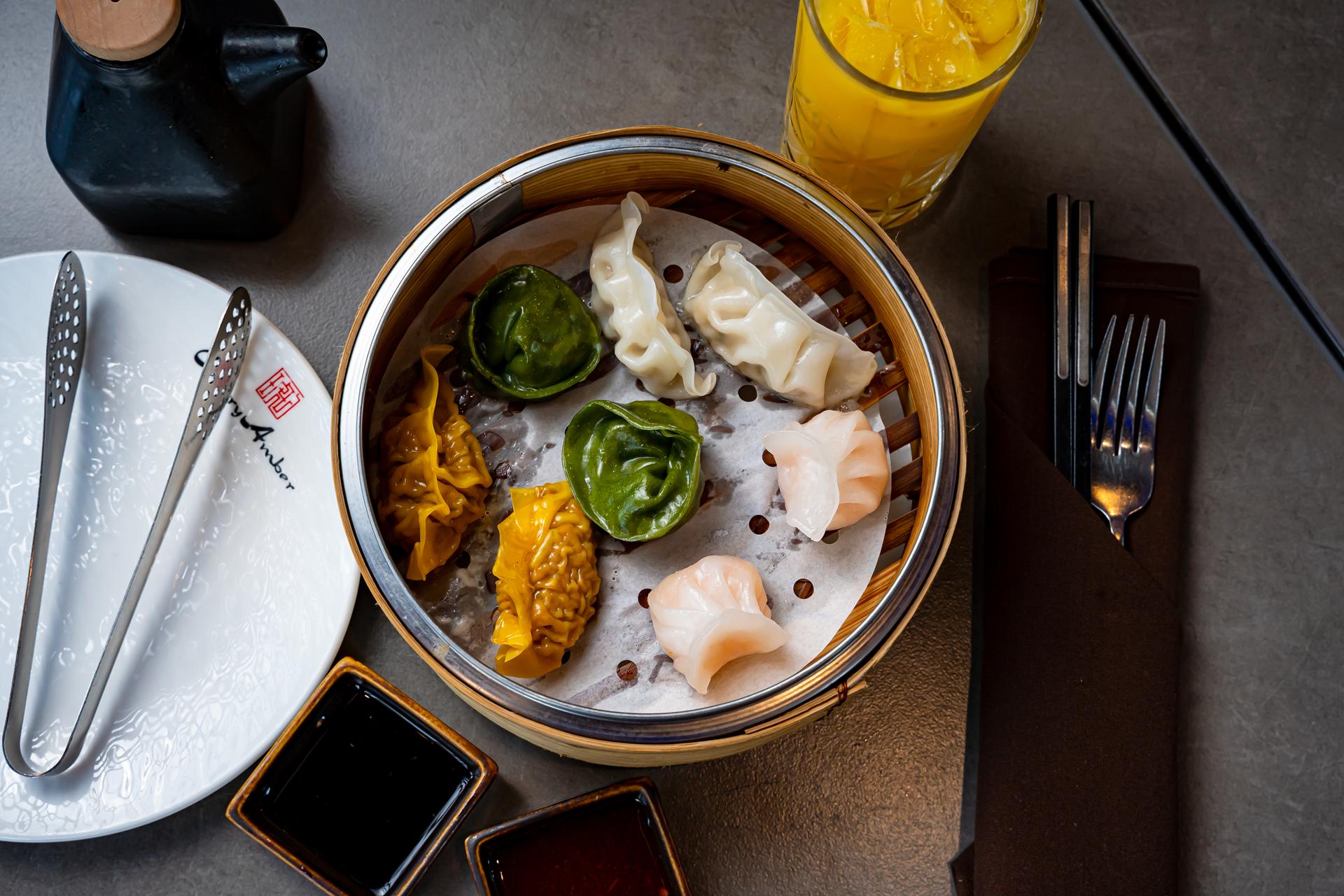
Where Chinese Technique Meets a Contemporary Table
There is a particular satisfaction in watching a wok-fired dish arrive at the table — the edge of caramelization on the protein, the lift of heat still rising from the plate. At Cherry Amber on Old Country Road in Plainview, that process is not incidental. The restaurant's own guiding philosophy names it plainly: wok fired daily. That single phrase carries real weight for anyone who has spent time thinking about how Chinese cooking actually works, because the wok is not merely a pan — it is the reason certain flavors exist at all.
Chinese cuisine in a suburban Long Island context often gets reduced to its most familiar exports. What Cherry Amber proposes is something more layered: a modern Chinese and pan-Asian kitchen that treats wok technique, dim sum, sushi, hibachi, and noodles as parts of a single, coherent conversation rather than separate silos bolted together on one menu.
Understanding the Menu Structure
The breadth of Cherry Amber's menu is best understood as an architecture of intention rather than ambition run wild. The categories span dim sum and small plates, kitchen entrées, hibachi, a dedicated Wok N' Grill section of signature entrées, noodles, soups, salads, sushi starters, à la carte sushi and sashimi, chef special rolls, and classic hand rolls — and that's before the lunch specials enter the picture.
For diners approaching Chinese cuisine specifically, the most useful entry points are the wok-fired dishes and the dim sum. Dim sum belongs to a long tradition of sharing — small portions circulated across the table, each one a distinct study in filling, wrapper, or preparation. The menu's framing of dishes as made to share maps directly onto this tradition. Ordering across the small plates and kitchen entrées together is not a workaround; it is the intended mode.
The Wok N' Grill signature section deserves attention as the clearest expression of the kitchen's Chinese cooking identity. Wok technique — high heat, fast movement, precise timing — produces the wok hei quality that low-and-slow cooking simply cannot replicate. It is the difference between a dish that is merely correct and one that has character.
For the sushi side of the menu, a practical note: à la carte sushi is listed as one piece per order and sashimi as two pieces, so building a varied spread requires intentional ordering. Some sushi dinner entrées arrive with soup or salad included, which changes the calculus on portion planning.
Lunch as a Different Kind of Chinese Dining Experience
Lunch at Cherry Amber runs Monday through Friday from 11 AM to 3:30 PM, holidays excluded, and it operates as a distinct program from the dinner menu. The categories — Kitchen Lunch Specials, Noodle & Fried Rice Lunch, Lunch Bento Boxes, and Japanese Lunch — suggest a midday format built around efficiency and value without abandoning variety.
Bento boxes occupy an interesting position here. They compress the logic of a full meal — main, sides, often rice — into a single contained order, which suits a lunch hour with real time constraints. The noodle and fried rice options represent Chinese comfort at its most direct: dishes built on technique, seasoning, and ingredients that need no elaborate explanation to be satisfying.
For diners who want to explore the Chinese side of the menu without committing to a full dinner evening, a weekday lunch is an efficient way to sample the kitchen's range. The lower-pressure format of a lunch service often allows for more attention per table than a packed Friday dinner.
Navigating the Experience Beyond the Plate
Cherry Amber positions itself around the idea of a modern Long Island point of view — a phrase that acknowledges geography honestly. Long Island dining has its own texture: a mix of culinary ambitions drawn from proximity to New York City, a diner population accustomed to variety, and a suburban setting that rewards restaurants willing to go beyond the expected.
The restaurant's experiences program — which includes weekend brunch, a daily happy hour at the bar running from noon to 6 PM, sushi bento, a hands-on seafood boil, cocktails, and private events — situates the food within a broader social context. Chinese cuisine has always had a social architecture: the round table, the rotating tray, the meal as a shared event rather than a series of individual orders. The emphasis on sharing and the variety of format options at Cherry Amber reflect that logic.
For guests with food allergies or sensitivities, the menu carries a clear advisory: some items contain raw or undercooked meat, fish, shellfish, or fresh shell eggs. The guidance is to speak directly with the owner, manager, chef, or server before ordering — practical advice that applies equally to Chinese preparations involving raw seafood as to the sushi program.
What Chinese Cuisine Looks Like Here
The version of Chinese cuisine that Cherry Amber presents is neither a strict regional tradition nor a generic American-Chinese approximation. It is a considered modern synthesis — wok technique as foundation, dim sum as social ritual, noodles as comfort, and a menu wide enough to accommodate an entire table's worth of different appetites.
For diners who arrive with specific curiosity about Chinese cooking, the wok-fired dishes and the dim sum section offer the clearest window into the kitchen's identity. For those who want to range more widely across the pan-Asian menu, the structure accommodates that too. The two impulses — depth in Chinese technique and breadth across Asian culinary traditions — are not in conflict at this table. They are the point.
Frequently asked questions
What Chinese dishes are available at Cherry Amber?
Cherry Amber's menu includes wok-fired kitchen entrées, Wok N' Grill signature dishes, dim sum and small plates, noodles, soups, and lunch specials such as Kitchen Lunch Specials and Noodle & Fried Rice Lunch — all reflecting the restaurant's modern Chinese and pan-Asian cooking approach.
Does Cherry Amber serve dim sum?
Yes. Dim sum and small plates are a dedicated section of Cherry Amber's menu, consistent with the restaurant's philosophy of dishes made to share.
What are the lunch hours for Chinese food at Cherry Amber?
Lunch service runs Monday through Friday from 11 AM to 3:30 PM, holidays excluded. Options include Kitchen Lunch Specials, Noodle & Fried Rice Lunch, Lunch Bento Boxes, and Japanese Lunch.
Is wok cooking used at Cherry Amber?
Yes. 'Wok fired daily' is a stated part of Cherry Amber's kitchen philosophy, and the menu features a dedicated Wok N' Grill signature entrées section alongside other wok-prepared dishes.
Does Cherry Amber accommodate guests with food allergies?
The menu advises guests with food allergies to speak with the owner, manager, chef, or server before ordering, as some items may contain raw or undercooked meat, fish, shellfish, or fresh shell eggs.
Can I order Chinese food for takeout or delivery from Cherry Amber?
Yes. Cherry Amber offers dine-in, takeout, and delivery services.
Sources
- Brand positioning and selling points — www.cherryamberny.com
- Sushi service specifics — www.cherryamberny.com
- Local experiences and offerings — www.cherryamberny.com